

HEADNOTE
Leayan Global Pvt. Ltd. v. Bata India Ltd. & Ors.
Court: Delhi High Court
Jurisdiction: Commercial Appellate (Original Side)
Bench: Justices C. Hari Shankar & Om Prakash Shukla
Date of Judgment: December 15, 2025
Citation: FAO(OS)(COMM) 105/2019 & FAO(OS)(COMM) 193/2019
Laws / Sections Involved: Trade Marks Act, 1999 – Sections 28, 29, 30, 33, 135; Code of Civil Procedure, 1908 – Order XXXIX Rules 1, 2 & 4
Keywords: trademark infringement, POWER vs POWER FLEX, interim injunction, deceptive similarity, acquiescence, exhaustion of stock
Summary
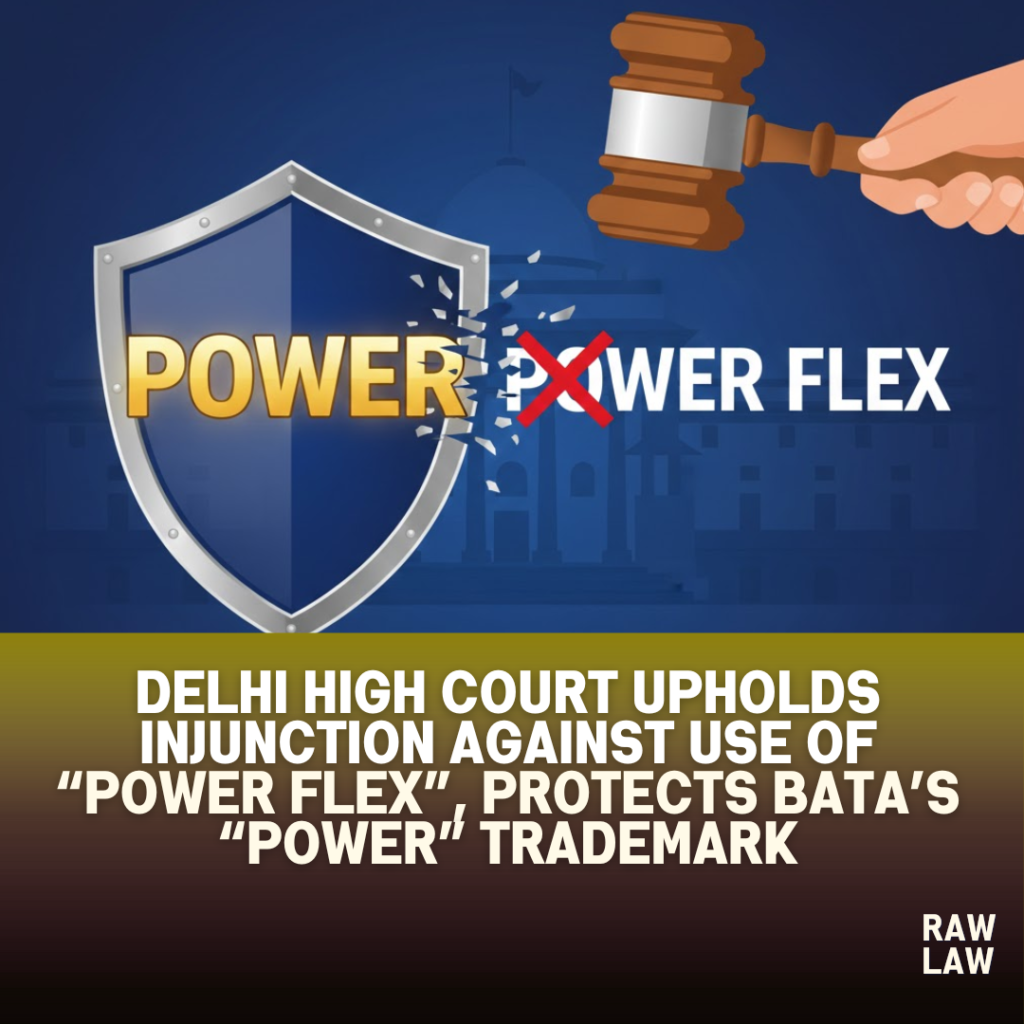
The Delhi High Court dismissed cross-appeals filed by Leayan Global Pvt. Ltd. and Bata India Ltd., upholding an interim injunction restraining Leayan from using the mark “POWER” or “POWER FLEX” for footwear. The Court held that Bata’s registered mark “POWER” had acquired strong distinctiveness and goodwill, and that Leayan’s use of “POWER FLEX” was deceptively similar, likely to cause consumer confusion. Rejecting defences of delay, acquiescence, and honest concurrent use, the Court ruled that mere passage of time or partial awareness does not defeat statutory trademark rights. However, the Court permitted limited sale of existing stock subject to safeguards and allowed descriptive use of the tagline “THE POWER OF REAL LEATHER” without undue prominence to the word “POWER”. The judgment reinforces strict protection for well-established trademarks at the interim stage.
Court’s decision
The Delhi High Court dismissed both appeals and upheld the Single Judge’s interim order restraining Leayan from using the word “POWER”, either alone or in combination, including “POWER FLEX”, for footwear and allied goods. The Court affirmed that Bata had made out a strong prima facie case of infringement and likelihood of confusion. At the same time, it declined to interfere with the limited permission granted to Leayan to sell existing stock and to use the tagline “THE POWER OF REAL LEATHER” in a purely descriptive manner.
Facts
Bata India Ltd., proprietor of the registered trademark “POWER” since the 1970s for footwear, instituted a commercial suit alleging that Leayan’s mark “POWER FLEX” infringed its statutory and common law rights. An ex parte injunction was initially granted restraining use of “POWER”. Subsequently, the Single Judge confirmed the injunction, allowed disposal of existing stock subject to conditions, and permitted descriptive use of the tagline without emphasis on “POWER”. Both parties appealed—Leayan challenging the restraint, and Bata opposing the stock clearance and tagline permission.
Issues
Whether Leayan’s use of the mark “POWER FLEX” infringed Bata’s registered trademark “POWER”; whether Bata’s claim was barred by delay or acquiescence; and whether the Single Judge was justified in permitting sale of existing stock and limited descriptive use of the word “POWER” in advertising.
Appellant (Leayan) arguments
Leayan argued that “POWER” is a common dictionary word incapable of monopoly and that “POWER FLEX” was always used in conjunction with its house mark “RED CHIEF”. It relied on alleged long and honest concurrent use since 2010, celebrity endorsements, and delay in institution of the suit to contend acquiescence. It also asserted that Bata used “POWER” primarily for sports footwear, while Leayan used it for premium leather shoes, negating likelihood of confusion.
Respondent (Bata) arguments
Bata contended that it was the prior registered proprietor with decades of goodwill and substantial sales under the “POWER” mark. It argued that Leayan’s evidence of use was sketchy and that adoption of “POWER FLEX” could not be honest given Bata’s market prominence. Bata submitted that delay does not defeat an infringement action and that permitting stock clearance and tagline usage diluted its exclusive rights.
Analysis of the law
The Court undertook an extensive analysis of Sections 28 and 29 of the Trade Marks Act, reiterating that infringement hinges on deceptive similarity and likelihood of confusion from the perspective of an average consumer with imperfect recollection. It held that “POWER”, when used for footwear, is at most suggestive and inherently distinctive. The Court rejected reliance on Section 30, finding that “POWER FLEX” was not merely descriptive but functioned as a trademark.
Precedent analysis
The Bench relied on Laxmikant V. Patel v. Chetanbhai Shah to emphasise reasonable scope of brand expansion and on Amritdhara Pharmacy v. Satya Deo Gupta for the test of imperfect recollection. It clarified that acquiescence under Section 33 requires conscious inaction for five years with knowledge, which was not established. The Court also distinguished authorities cited on honest concurrent use, noting that such pleas are relevant at the registration stage, not as a defence to infringement.
Court’s reasoning
The Court held that Bata’s “POWER” mark enjoyed strong market association and that Leayan’s adoption of “POWER FLEX” was likely to cause confusion, especially as footwear goods are allied and cognate. It found no perversity in the Single Judge’s assessment of evidence. However, balancing equities, the Court upheld the limited permission to exhaust existing stock under strict conditions and allowed descriptive use of the word “POWER” in a tagline, provided it did not acquire trademark significance.
Conclusion
The Delhi High Court confirmed the interim injunction restraining use of “POWER FLEX”, rejected defences of delay and acquiescence, and upheld limited equitable reliefs granted by the Single Judge. Both appeals were dismissed.
Implications
This judgment strengthens interim protection for well-known and long-standing trademarks, clarifies the narrow scope of acquiescence as a defence, and reiterates that descriptive use is permissible only when it does not assume trademark character. It offers important guidance for branding strategies in competitive consumer markets.
Case law references
• Laxmikant V. Patel v. Chetanbhai Shah (2002) 3 SCC 65
Holding: Courts must consider reasonable expansion of business while assessing confusion.
Application: Used to reject the footwear-category distinction argument.
• Amritdhara Pharmacy v. Satya Deo Gupta AIR 1963 SC 449
Holding: Test of deceptive similarity is based on imperfect recollection.
Application: Applied to assess likelihood of confusion.
• Midas Hygiene Industries v. Sudhir Bhatia (2004) 3 SCC 90
Holding: Delay does not defeat injunction in infringement cases.
Application: Relied upon to reject delay and acquiescence defence.
FAQs
Q1. Can a common word like “POWER” be protected as a trademark?
Yes, if it is distinctive or has acquired distinctiveness through long and extensive use.
Q2. Does delay automatically bar a trademark injunction?
No. Mere delay does not defeat an infringement action unless statutory acquiescence is proved.
Q3. Is descriptive use of a trademarked word allowed?
Yes, but only if it is purely descriptive and does not function as a trademark.


