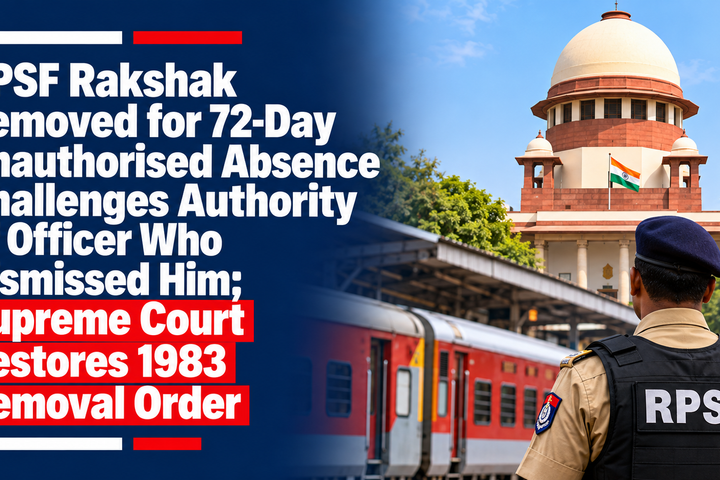
Delhi High Court Grants Bail in 91-Kg Ganja Syndicate Case; Finds No Recovery, Weak CDR Link and Only Co-Accused Confessions Against Applicant

Section 37 NDPS Cannot Be Invoked Merely Because Commercial Quantity Was Recovered From Others, Delhi High Court Holds While Granting Bail
Facts
The petitioner, Rabiul, sought regular bail in FIR No. 11/2026 registered at Police Station Sunlight Colony for offences under Sections 20 and 29 of the Narcotic Drugs and Psychotropic Substances Act, 1985.
The prosecution alleged that the petitioner was part of a drug syndicate and was its mastermind. A total of 91.122 kg of ganja, constituting commercial quantity, had been recovered from five co-accused. Significantly, however, no contraband was recovered from the petitioner himself.
The petitioner had remained in custody since 17 January 2026.
When specifically questioned by the Court regarding the material connecting him to the alleged syndicate, the prosecution identified three categories of evidence: disclosure statements of co-accused persons; Call Detail Record connectivity between the petitioner and co-accused; and payments of ₹20,000, ₹12,000, ₹8,000, ₹3,000 and ₹800 allegedly made by the petitioner to co-accused persons.
The prosecution also stated that the petitioner was involved in three other criminal cases, although none involved offences under the NDPS Act.
Issues
The principal issues before the Court were:
- Whether the stringent twin conditions under Section 37 of the NDPS Act could justify denial of bail merely because commercial quantity contraband had been recovered from co-accused.
- Whether there was reliable and legally admissible evidence connecting the petitioner with the recovery of 91.122 kg ganja.
- Whether mere CDR connectivity, without subscriber records or intercepted conversations, constituted cogent incriminating evidence.
- Whether relatively small monetary transfers to co-accused could establish that the payments represented consideration for contraband.
- Whether confessional statements of co-accused recorded in police custody, without any consequential recovery, could provide a sufficient basis for continued incarceration.
Petitioner’s Arguments
The petitioner argued that he had been falsely implicated and had remained incarcerated since 17 January 2026 despite there being no recovery of contraband from him.
His case was essentially that there was no reliable evidence connecting him with the alleged recovery from the five co-accused.
The prosecution’s case against him rested on statements of co-accused, alleged telephonic connectivity and certain monetary transactions, none of which, according to him, sufficiently established participation in the alleged drug syndicate.
Respondent’s Arguments
The State strongly opposed bail, describing the petitioner as the mastermind of the drug syndicate.
It emphasised that 91.122 kg of ganja had been recovered from the syndicate. Since the quantity was commercial, the State contended that the stringent twin conditions under Section 37 of the NDPS Act necessarily applied.
The State relied upon the disclosure statements of co-accused, CDR connectivity and monetary payments allegedly made by the petitioner to co-accused persons.
It additionally referred to the petitioner’s involvement in three other criminal cases, though it acknowledged that none of them involved the NDPS Act.
Analysis of the Law
The High Court acknowledged that where the alleged recovery involves commercial quantity, the twin conditions prescribed under Section 37 of the NDPS Act ordinarily come into operation.
However, the Court identified an important anterior inquiry: before applying the rigours of Section 37, the Court must determine whether reliable and legally admissible evidence exists connecting the particular accused with the alleged commercial quantity recovery.
The mere fact that commercial quantity contraband has been recovered from another person cannot, without reliable connecting evidence, justify deprivation of an accused’s liberty on the assumption that he was somehow associated with that person.
The Court therefore focused on the evidentiary link between the petitioner and the alleged syndicate rather than mechanically applying Section 37 merely because the quantity recovered from the co-accused was commercial.
Precedent Analysis
The judgment does not cite or analyse any specific precedent.
Instead, the Court directly applied the statutory framework under Section 37 of the NDPS Act and examined whether the prosecution material provided a reliable and legally admissible connection between the petitioner and the commercial quantity contraband recovered from his co-accused.
Accordingly, no precedent should be attributed to this judgment beyond the principles expressly articulated by the Court itself.
Court’s Reasoning
The Court first examined the alleged CDR connectivity.
The Investigating Officer candidly admitted that the prosecution did not possess the Customer Application Forms (CAF) relating to either of the telephone numbers allegedly used for communication. In those circumstances, the Court held that the CDRs alone could not support the allegation against the petitioner.
Further, none of the telephone conversations between the petitioner and the co-accused had been intercepted. There was therefore no material showing what was actually discussed during the calls. The Court consequently observed that mere telephonic connectivity, without evidence regarding the content of the conversations, might not constitute cogent incriminating evidence.
The Court next examined the monetary transfers. Considering the relatively small amounts involved—₹20,000, ₹12,000, ₹8,000, ₹3,000 and ₹800—it held that it could not be said with certainty that these payments represented the price of contraband.
This left the prosecution principally with the statements of the co-accused recorded while they were in police custody.
The Court noted that no recovery had been effected pursuant to those statements. Consequently, the statements remained merely confessional statements and did not even acquire the character of disclosure statements resulting in discovery.
On the cumulative assessment of these circumstances, the Court found insufficient reason to continue depriving the petitioner of his liberty.
Conclusion
The Delhi High Court allowed the regular bail application.
The Court held, in substance, that the commercial quantity recovered from co-accused could not by itself justify continued incarceration of the petitioner when there was no recovery from him and no sufficiently reliable evidence connecting him with the recovered contraband.
The alleged CDR link was weakened by the absence of CAF records and intercepted conversations; the small monetary transactions did not conclusively establish payment for narcotics; and the co-accused’s custodial confessions were unsupported by any consequential recovery.
The petitioner was therefore directed to be released on bail upon furnishing a personal bond of ₹15,000 with one surety of the like amount to the satisfaction of the Trial Court.
The High Court clarified that its observations would not prejudice either party at trial and that the Trial Court would independently assess the evidence ultimately adduced.
Case Details
Case: Rabiul v. State Govt. of NCT of Delhi
Court: High Court of Delhi at New Delhi
Case Number: BAIL APPLN. 3224/2026 & CRL.M.A. 24246/2026
Judge: Hon’ble Mr. Justice Girish Kathpalia
Date: 11 August 2026
FIR: FIR No. 11/2026, P.S. Sunlight Colony
Offences: Sections 20/29, NDPS Act
Result: Regular bail granted; petitioner directed to be released on a personal bond of ₹15,000 with one surety of the like amount.
Read also: Delhi High Court Sets Aside ₹14.27 Lakh Ex-Parte Recovery Decree; Holds Unproved Electronic Account Statements and Bald Claims Cannot Establish Contractual Dues