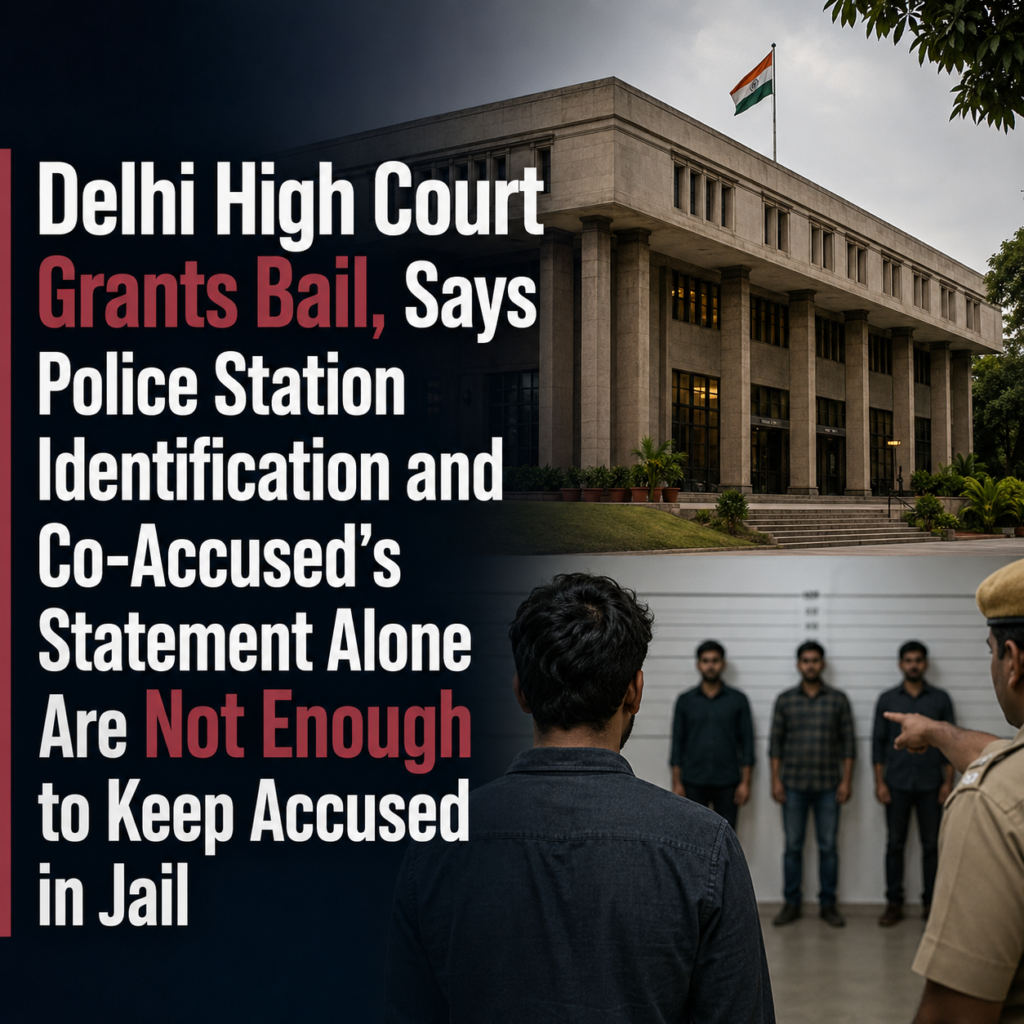
Delhi High Court Grants Bail, Says Police Station Identification and Co-Accused’s Statement Alone Are Not Enough to Keep Accused in Jail

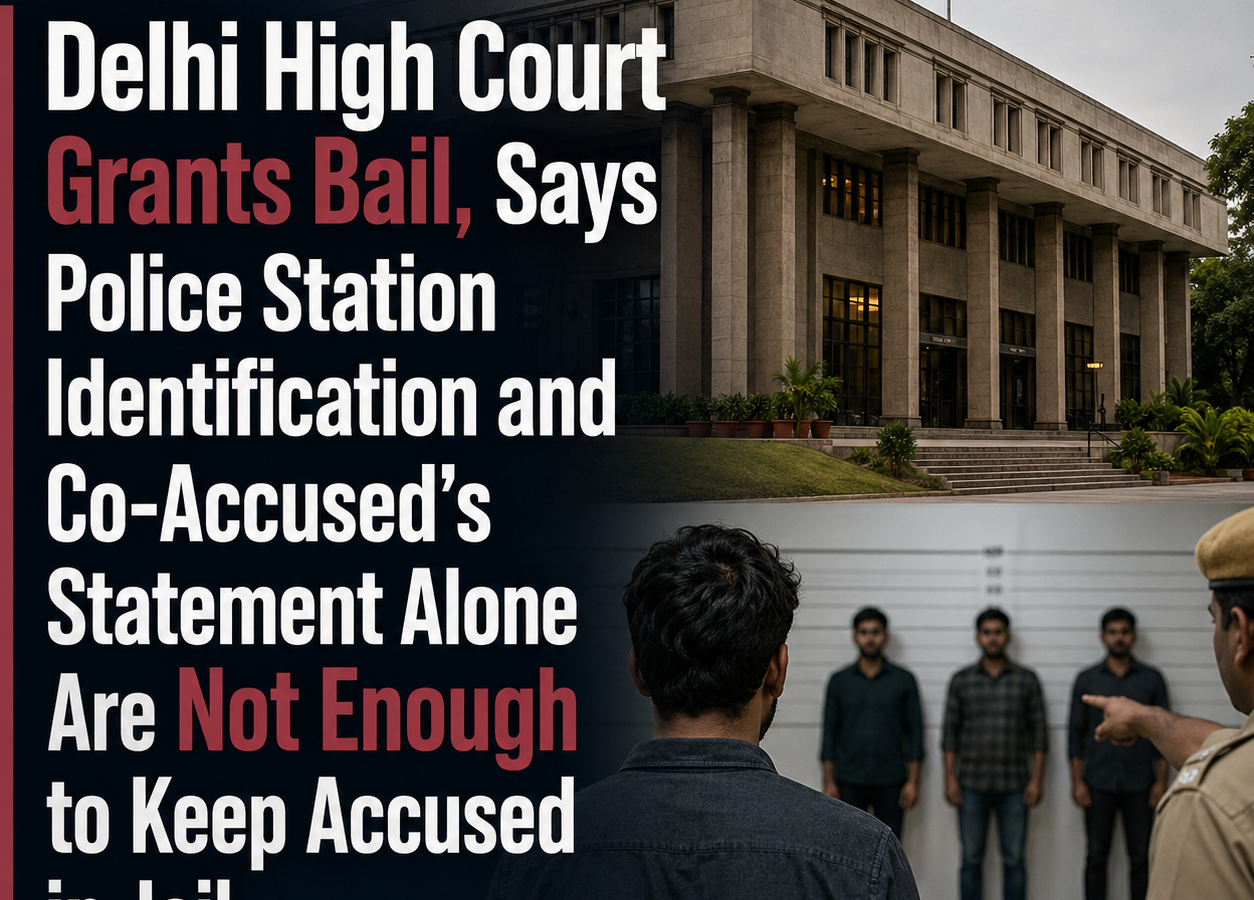
Delhi High Court Grants Bail to Accused in College Admission Cheating Case, Notes Prosecution Relied Mainly on Police Station Identification and Co-Accused Disclosure
Facts
The petitioner, Kumar Gaurav, sought regular bail in FIR No. 674/2025 registered at Police Station Subhash Place, Delhi, for offences under Sections 318(4), 316(2), 61(2), 3(5) and 112 BNS.
The prosecution case was that the main accused, Pranav, allegedly cheated students by collecting money from them on the pretext of arranging admissions in a college in Mumbai, though he allegedly had no such connections. As regards the petitioner, the allegation was that he acted as a conspirator and was present when money was paid by the students to the main accused. The prosecution further alleged that Pranav shared ₹25,00,000 with the petitioner from the cheated amount.
Issues
Whether the petitioner was entitled to regular bail after filing of the chargesheet.
Whether the evidence relied upon by the prosecution was sufficient to justify continued custody.
Whether the alleged identification of the petitioner at the police station and disclosure statement of the co-accused were adequate grounds to deny bail.
Petitioner’s Arguments
The petitioner argued that he was innocent and had been in custody since 2 February 2026.
It was submitted that there was no legally admissible evidence against him. The petitioner further contended that since the chargesheet had already been filed, no useful purpose would be served by keeping him in jail.
Respondent’s Arguments
The State opposed the bail application and submitted that the complainant students had identified the petitioner at the police station and stated that he used to be present whenever they paid money to the main accused Pranav.
The State further relied on the disclosure statement of co-accused Pranav, who allegedly stated in police custody that he had withdrawn ₹25,00,000 from his bank account out of the cheated amount and handed it over to the petitioner.
However, the APP fairly submitted that apart from the police station identification and the disclosure statement of co-accused Pranav, there was no other evidence against the petitioner.
Analysis of the Law
The Court considered the nature of evidence relied upon by the prosecution at the bail stage. It noted that the prosecution case against the petitioner was limited to his alleged presence during payment of money and the disclosure statement of the co-accused.
The Court also took into account that the chargesheet had already been filed and the petitioner had been in custody since 2 February 2026.
Precedent Analysis
No specific precedent was discussed in the order. The bail application was decided on the facts of the case, particularly the nature of evidence relied upon by the prosecution and the stage of proceedings.
Court’s Reasoning
The Court noted that the prosecution evidence against the petitioner was limited. The complainant students had allegedly identified him at the police station, and the other material relied upon was the disclosure statement of the main accused Pranav.
The Court found that, considering the limited nature of evidence and the fact that there was no other material against the petitioner, continued deprivation of liberty was not justified.
Conclusion
The Delhi High Court allowed the bail application and directed that Kumar Gaurav be released on bail upon furnishing a personal bond of ₹10,000 with one surety of the like amount to the satisfaction of the Trial Court.
Case: Kumar Gaurav v. State (NCT of Delhi)
Court: Delhi High Court
Case Number: BAIL APPLN. 2392/2026 & CRL.M.A. 18655/2026
Judge: Justice Girish Kathpalia
Date: 2 July 2026
Result: Bail application allowed; petitioner directed to be released on regular bail.